If your outdoor AC unit starts to hum, hesitate, or struggle to spin up, the problem may be a weakening capacitor rather than a full system failure. In Central Florida heat, that small part can affect startup, airflow, and how quickly your home gets back to comfortable.
A capacitor is one of those parts homeowners rarely think about until it starts failing. When it weakens, the system may still try to run, but it often sounds different, works harder, and may protect itself by shutting down early. That is why a simple noise can be an early warning sign worth checking.
What a struggling AC capacitor usually sounds like
Many homeowners notice the problem outside before they feel it inside. A weak capacitor can create sounds like:
- a steady humming from the outdoor unit
- a click or attempt to start, followed by another pause
- a faint buzz when the system should be starting normally
- a fan that seems slow to get going or never fully gets up to speed
Those sounds matter because they usually mean a motor is not getting the boost it needs to start cleanly. If the fan or compressor keeps trying to start, the system can wear itself out faster.
What homeowners often feel inside the house
Capacitor trouble does not just stay outside. It often shows up as comfort issues indoors, including:
- warm air coming from the vents
- long cooling cycles that never seem to catch up
- higher indoor humidity
- rooms that feel stuffy even when the thermostat is set properly
- the system turning on and off more often than usual
If you have been dealing with uneven cooling or a house that feels warmer than it should, it may be time to compare the problem with other common AC issues. You can start by reviewing our AC installation and repair services or, if the system is older and repairs are stacking up, our AC replacement options.
Why Central Florida weather makes the problem show up faster
In a mild climate, a weak capacitor may linger for a while before it becomes obvious. In Central Florida, your AC has to work hard for long stretches, especially during hot afternoons and humid evenings. That extra demand can expose a weak part quickly.
When a capacitor is already tired, repeated start attempts can stress the compressor and fan motor. That is one reason homeowners should avoid the “wait and see” approach if the outdoor unit is clearly struggling.
What not to do if you hear the warning signs
It is tempting to reset the thermostat, flip the breaker, or keep trying the system in hopes it will start normally on its own. That usually does not solve the underlying issue. If the capacitor is weak, repeated attempts can make the problem worse.
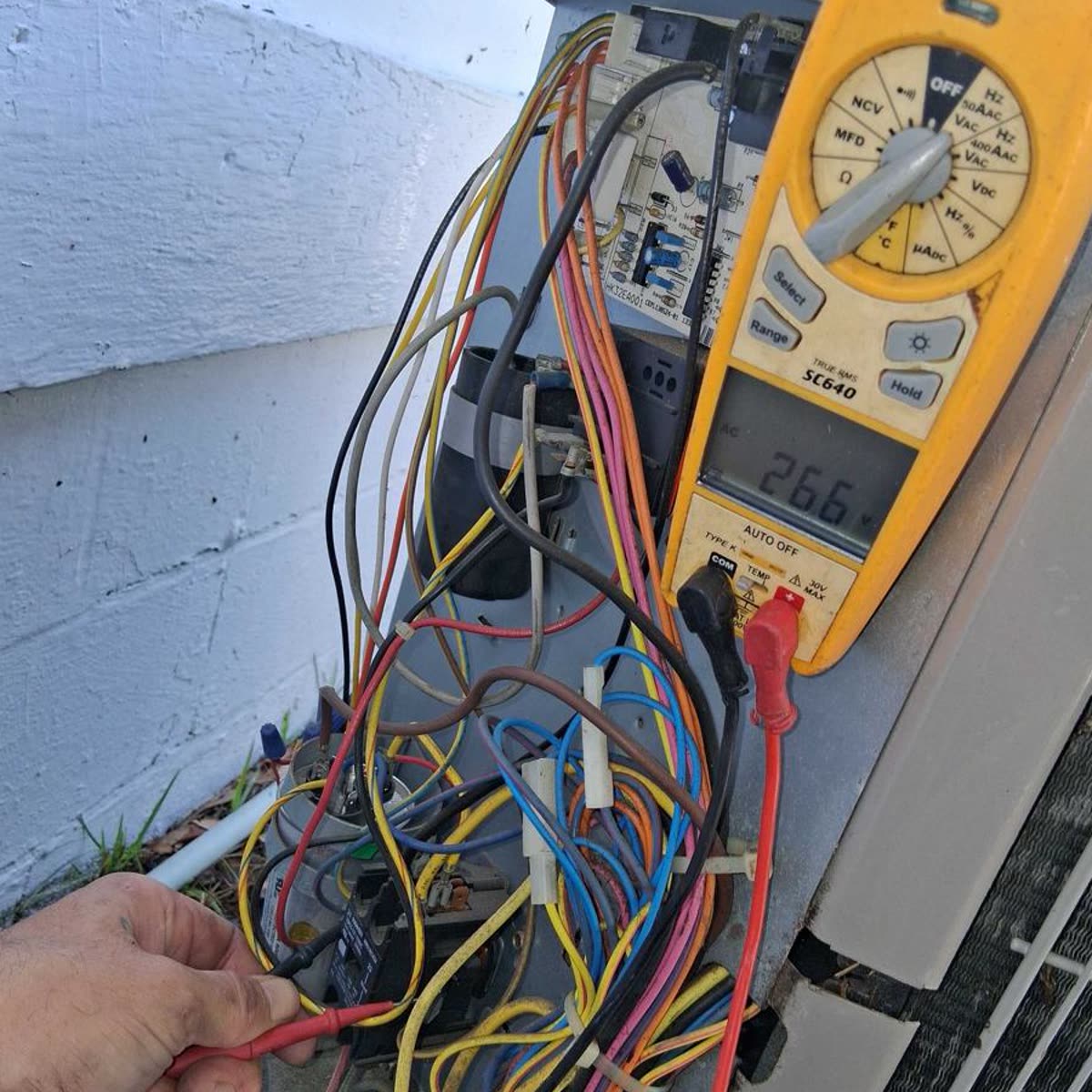
It is also not a safe do-it-yourself repair. Capacitors can hold a charge even after the power is off, so this is a job for a trained HVAC technician with the right testing tools and safety practices.
When to call for service
If your AC is humming, starting slowly, or failing to cool the house the way it should, schedule a diagnosis before the issue turns into a bigger repair. A capacitor replacement is often straightforward when caught early, but if the compressor or fan motor has also been damaged, the next step may be different.
Need help now? Reach out through our contact page for fast help in Central Florida. If the system is aging and you want to compare repair versus replacement, our emergency AC repair and replacement services can help you make the right call.
Frequently asked questions
Can an AC still run with a bad capacitor?
Sometimes it will try to run, but the start-up may be weak, noisy, or inconsistent. That is why a bad capacitor can seem minor at first and then turn into a bigger failure later.
Does a bad capacitor always mean the whole system is failing?
No. In many cases, the capacitor is the main issue and replacing it restores normal operation. But the longer the system struggles, the more likely other parts can be affected.
Should I keep turning the AC back on if it is making noise?
It is better to stop and have it checked. Repeated start attempts can add stress to the compressor and fan motor, especially during heavy cooling demand.
If your AC sounds different than it used to, don’t ignore it. A quick service call now may prevent a larger repair later and help your home stay comfortable through the hottest part of the week. For more practical homeowner tips, browse the Wingman blog.