Afternoon storms can leave a Central Florida home feeling fine for an hour, then suddenly the AC will not start, the breaker is tripped, or the air coming from the vents feels wrong. In Ocala, The Villages, and nearby communities, that usually means the storm did not damage the whole system, but it may have exposed a small problem that needs attention.
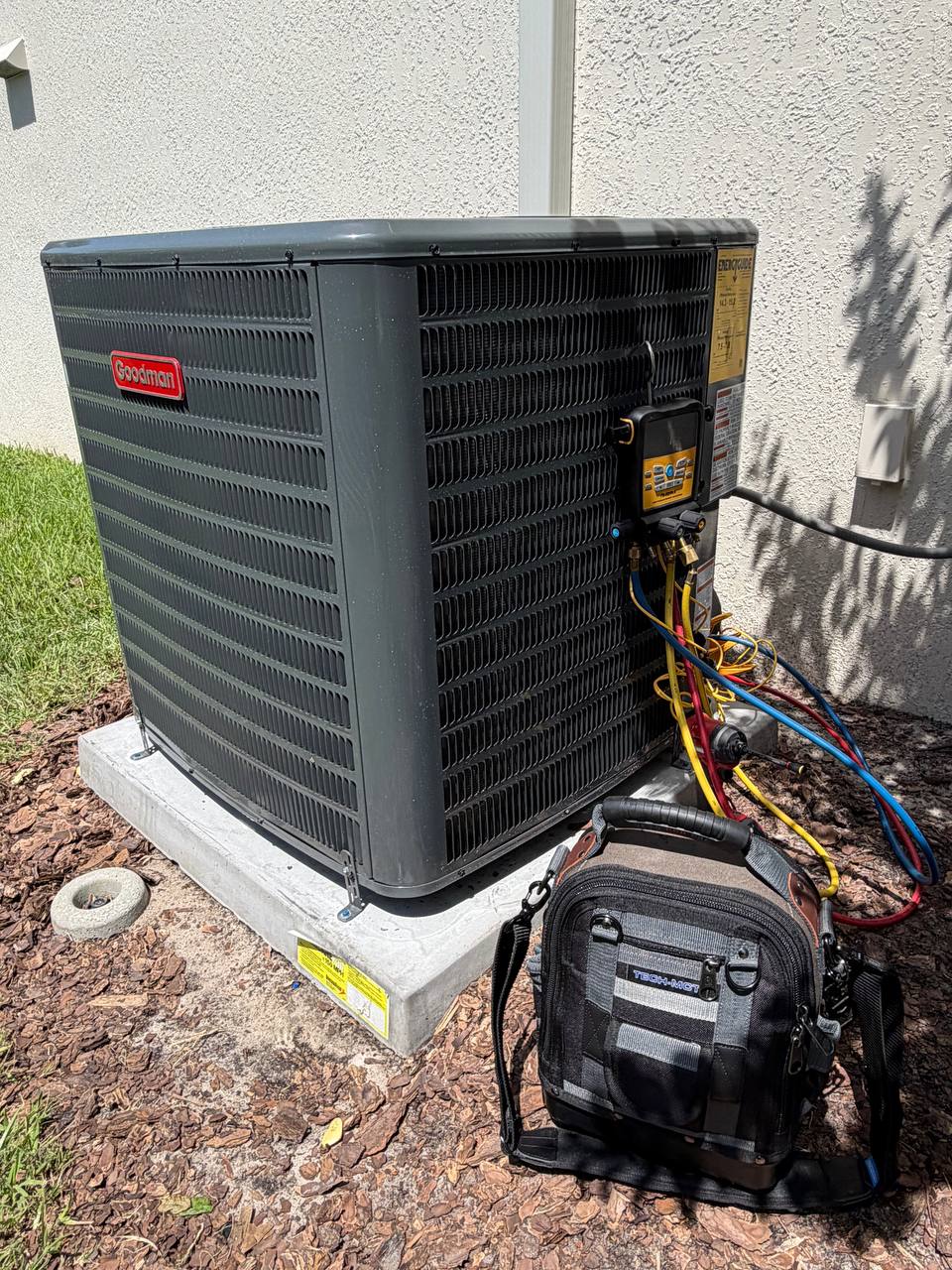
Storm moisture, debris, and quick power flickers can affect electrical parts, drainage, and the outdoor unit. Here are the most common things homeowners can check safely before calling for service.
1. Check the thermostat and breaker first
If the power blinked during the storm, the thermostat may have reset or the AC breaker may have tripped. Make sure the thermostat is still set to cool, the temperature is below the room temperature, and the batteries are working if your model uses them. If the breaker trips again after one reset, stop there and schedule service.
2. Look at the outdoor unit from the outside
Wind can push branches, leaves, palm fronds, or storm debris against the condenser. If anything is blocking the cabinet or the coil, shut the system off at the thermostat and clear the area gently. Do not bend the fins or spray the unit hard with a hose. If the cabinet looks bent, rattling, or visibly damaged, the system should be inspected before it runs again.
3. Watch for drainage problems after heavy rain
Central Florida storms often leave the air conditioner working through very wet air. That extra humidity can fill a weak drain line, wet the condensate pan, or trigger a float switch. If you see water around the air handler, a shutoff message on the thermostat, or the system turns on and off quickly, drainage is a likely culprit.
4. Listen for unusual start-up sounds
A healthy system should start smoothly. Loud buzzing, repeated clicking, grinding, or a hard start after a storm can point to an electrical problem, contactor issue, or a component that was already wearing out. Repeated restarts can make the issue worse, so it is better to turn the system off and have it checked.
5. Know when to call Wingman
Call for help if the AC will not restart, if the breaker keeps tripping, if the outdoor unit was hit by debris, or if the home still feels warm and muggy after the storm passes. Those are the problems that can turn a small storm-related glitch into a larger repair if they are ignored.
For homeowners in Ocala, The Villages, Summerfield, Wildwood, Lady Lake, and nearby Central Florida communities, the safest move after a storm is simple: check the basics, avoid repeated resets, and get the system inspected if anything still seems off.
If your AC started acting up after a storm, Wingman Heating & Cooling can help find the cause and get the system back on track.