Florida humidity can make a small air conditioning problem feel much bigger. A filter that is only a little dirty, a drain line that is partly clogged, or a thermostat that is slightly off can all turn into bigger comfort issues once the air outside gets sticky. When the house is already fighting moisture, the system has to work harder to keep indoor air cool, dry, and comfortable.
At Wingman Heating & Cooling, we help homeowners in The Villages, Leesburg, and the surrounding Central Florida area get ahead of those problems before they turn into no-cool calls. If your system is struggling, it may be a good time to review our AC repair in The Villages or AC repair in Leesburg pages and see whether your home needs a small fix, routine maintenance, or a more complete repair visit.
Why humidity makes AC problems worse
Air conditioners do more than lower the temperature. They also remove moisture from the air. When humidity is high, the system has to run longer and work harder to pull that moisture out. That means any existing issue, even one that seems minor, can show up faster and feel more severe.
A weak blower, a restricted filter, or a small refrigerant issue may not seem urgent on a mild day. In humid weather, though, those same problems can leave your home feeling clammy, warm, or uneven from room to room.
Small AC issues humidity can amplify
- Dirty or restricted air filters. A clogged filter can reduce airflow and make it harder for the system to remove heat and humidity at the same time.
- Weak airflow from vents. If air is barely moving, rooms can stay sticky even when the thermostat says the system is running.
- Thermostat problems. A thermostat that is poorly placed, incorrectly calibrated, or slow to respond can make the system cycle at the wrong times.
- Drain line clogs. Humid weather creates more condensate, so a partially blocked drain can quickly become a leak or shutdown issue.
- Duct leaks or duct damage. Leaky ducts can let cool air escape before it reaches the rooms that need it most.
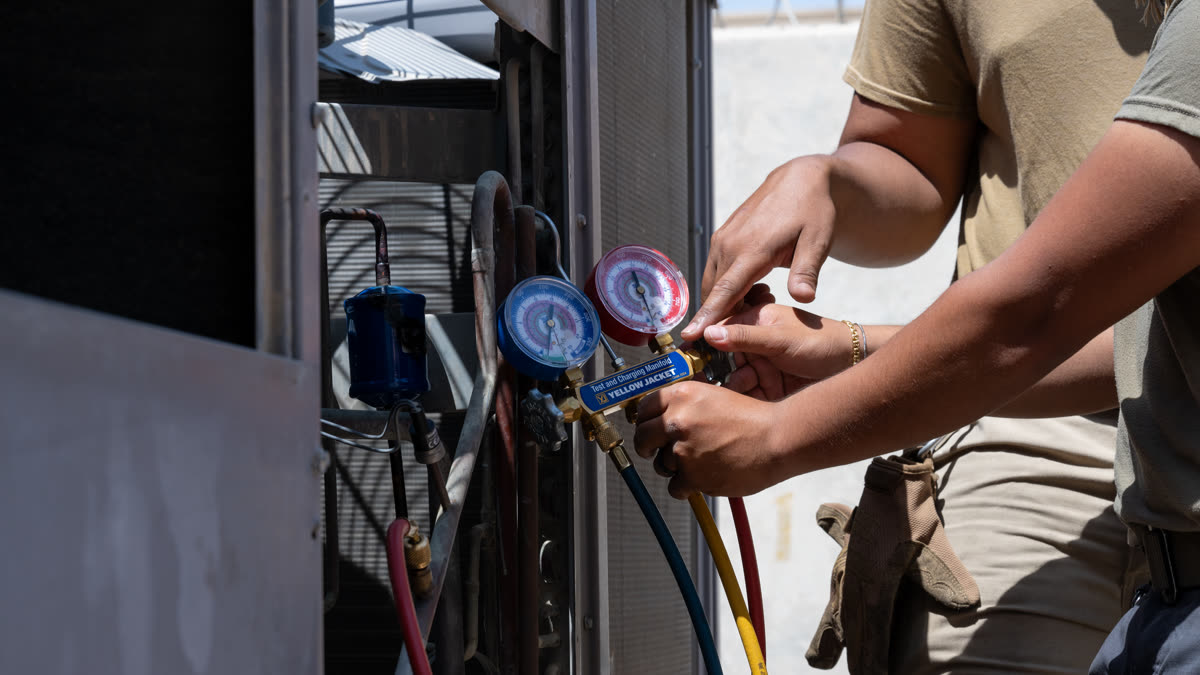
- Low refrigerant or cooling performance issues. When the system cannot cool efficiently, humidity tends to linger longer indoors.
If you suspect airflow is part of the problem, our duct cleaning services can help address buildup that may be restricting circulation, and our team can also inspect the system for signs of a bigger repair need.
Signs humidity is exposing a hidden AC problem
Homeowners often notice the same warning signs when humidity starts making a small issue worse:
- The AC runs longer than usual but the house never feels fully comfortable.
- Rooms feel cool but still sticky or damp.
- There is a musty smell near vents or around the air handler.
- Some rooms cool well while others stay warm.
- Water appears near the indoor unit or around the drain pan.
- The system seems to short cycle, or it starts and stops more often than normal.
Those symptoms do not always mean a major breakdown is coming. But they do mean the system needs attention before the weather gets hotter and the air gets even more humid.
What homeowners can check first
Before you call for service, a few quick checks can help you rule out simple issues:
- Replace the air filter if it is dirty or overdue.
- Make sure supply vents are open and not blocked by furniture or curtains.
- Confirm the thermostat is set correctly and has fresh batteries if needed.
- Look for standing water, overflow, or condensation near the indoor unit.
- Check that the outdoor unit has enough clear space around it.
If those basics do not help, the issue may be deeper than a simple homeowner fix. That is usually when it makes sense to schedule a professional inspection rather than keep pushing the system through humid weather.
When to schedule AC repair
Call for help if the system is running constantly, the home feels damp, or one or more rooms are no longer cooling the way they should. Humidity can hide the real source of the problem for a while, but it usually does not fix itself.
Wingman Heating & Cooling is a veteran-owned HVAC company serving homeowners across Central Florida. If you need a broader view of our coverage, visit our service areas page. If you are ready to book, you can also contact us online or call 352-340-0805 for fast, practical help.
Need help with a humid house or a struggling AC? Call 352-340-0805 or send us a message online for AC repair in The Villages, Leesburg, and surrounding Central Florida areas.
Frequently asked questions
Can humidity make my AC seem like it is failing when it is not?
Yes. High humidity can make a system feel weaker than it really is because the AC has to remove both heat and moisture. A small airflow or thermostat issue can feel much bigger in sticky weather.
Should I replace my filter more often during humid months?
In many homes, yes. A clean filter helps the system move air more easily and can improve both comfort and humidity control. If you are unsure how often to replace yours, ask during your next service visit.
Does every humidity issue mean I need a major repair?
No. Sometimes the fix is simple, like replacing a filter, clearing a drain line, or making a thermostat adjustment. Other times, the problem is tied to ductwork, refrigerant, or worn components that need professional attention.