
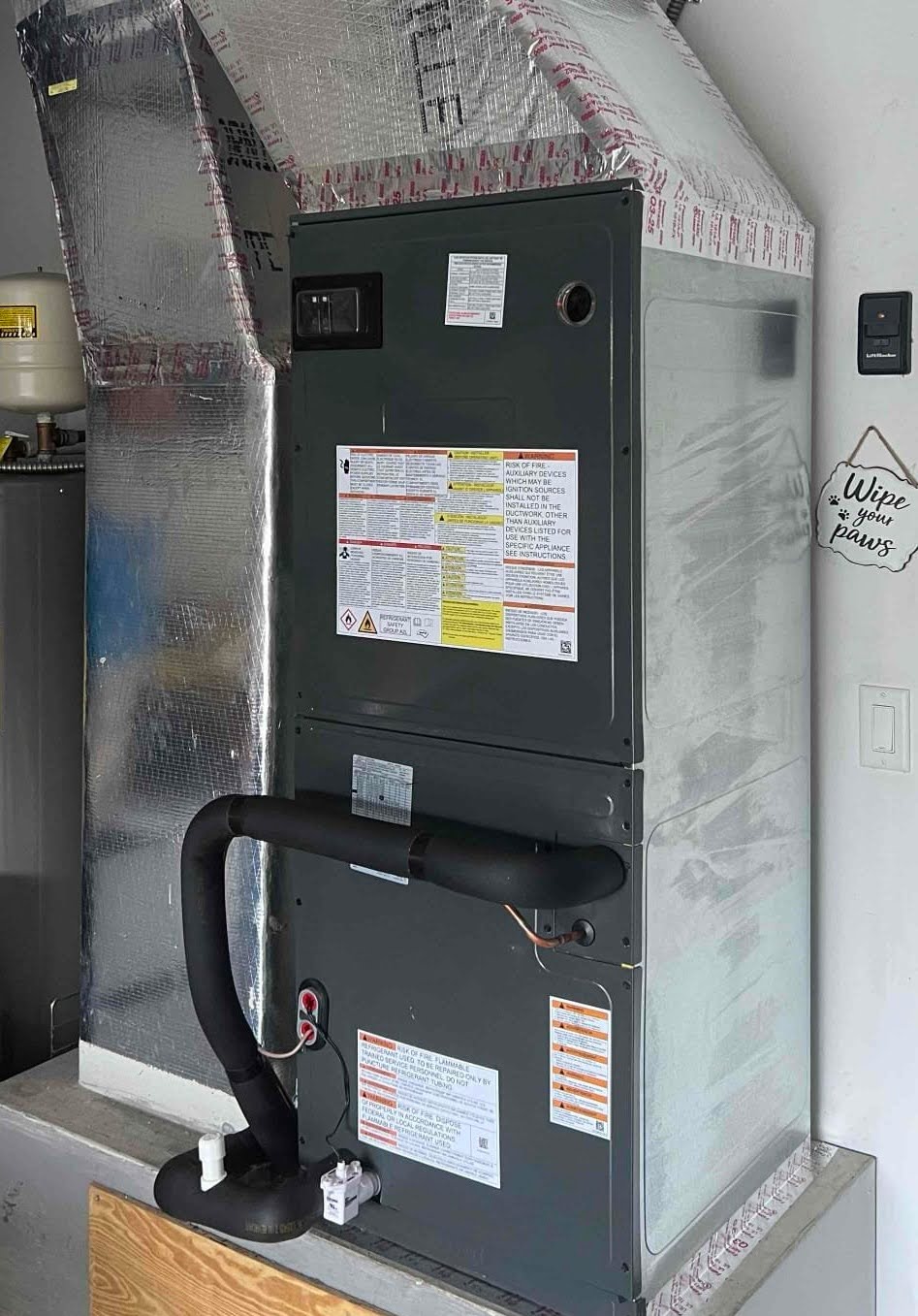
In Florida, your air conditioner does more than cool the air. It also removes a lot of moisture from your home. That moisture has to go somewhere, and in most systems, it drains away through a condensate drain line.
When everything is working properly, you probably never think about it. But when the drain line clogs, water can back up into the system, overflow into the drain pan, or leak into places you definitely do not want water — ceilings, closets, garages, air handler platforms, or flooring.
That is where an AC float switch can make a big difference.
For homeowners in The Villages, Ocala, Summerfield, Dunnellon, Beverly Hills, Wildwood, Lady Lake, Leesburg, Lecanto, Citrus Springs, Hernando, and nearby Central Florida areas, an AC float switch is a small safety device that can help reduce the risk of water damage from a clogged AC drain line.
What Is an AC Float Switch?
An AC float switch is a water safety switch installed on or near your HVAC system’s condensate drain system. Its job is simple: detect when water is backing up where it should not be.
When water rises to a certain level, the float switch triggers and shuts off the AC system. This helps stop the unit from continuing to create more condensation while the drain is blocked or the pan is filling.
In other words, the float switch does not fix the clog. It helps alert you that there is a drainage problem before the water keeps spreading.
Why Florida AC Systems Produce So Much Water
Florida homes deal with high humidity for much of the year. When warm, humid indoor air passes over the cold evaporator coil inside your AC system, moisture condenses on the coil. That water then drips into the drain pan and exits through the condensate drain line.
On a hot, humid Central Florida day, your AC may remove a significant amount of moisture from the air. That means the drain line is not an occasional-use part of the system — it is working constantly during cooling season.
Because of that, Florida AC drain lines are more likely to develop buildup from:
- Algae
- Slime
- Dirt and dust
- Rust or debris from older drain pans
- Insects or small obstructions
- Improper drain slope
- Lack of regular maintenance
When the drain line slows down or clogs completely, the water needs somewhere to go. Without a working safety switch, it may overflow.
What Happens When an AC Drain Line Clogs?
A clogged AC drain line can show up in a few different ways. Some homeowners notice water around the indoor unit. Others notice the thermostat is on, but the AC is not running. In many cases, that shutdown is actually the float switch doing its job.
Common signs of a drain issue include:
- AC turns off unexpectedly
- Thermostat is working, but the system will not cool
- Water around the indoor air handler
- A full or wet drain pan
- Musty smells near the AC unit
- Ceiling stains if the unit is in an attic
- Higher indoor humidity
- Repeated drain line clogs
If your system shuts down and you see water in the drain pan, do not keep resetting the system repeatedly. The shutdown may be protecting your home from a bigger leak.
Why Florida Homes Benefit From a Float Switch
An AC float switch is especially useful in Florida because our cooling systems run often and humidity is high. Even a well-installed AC system can develop drain problems over time.
A float switch can be especially important if your air handler is located:
- In an attic
- In a closet
- Above finished ceilings
- In a garage on a platform
- Near flooring, drywall, or stored belongings
- In a location where small leaks may go unnoticed
If the system is in an attic, a drain overflow can become a ceiling stain or drywall repair. If it is in a closet, water can damage flooring or nearby walls. A float switch helps stop the cooling cycle when water rises, giving you a chance to address the problem before it keeps getting worse.
Does a Float Switch Mean Something Is Wrong With the AC?
Not necessarily.
A float switch itself is a protective device. If it shuts the system down, it usually means the switch detected water where it should not be. The real issue may be a clogged drain line, a blocked drain pan outlet, poor drainage, or another condensate problem.
Think of it like a smoke detector. The alarm is not the fire — it is warning you to investigate.
If your AC has stopped running and the float switch has tripped, the safest next step is to check for visible water near the indoor unit and call an HVAC professional if the drain line appears clogged or the pan is holding water.
What Homeowners Can Safely Check
Before calling for service, there are a few simple things homeowners can safely look at.
You can check:
- Whether the thermostat is on and set to cool
- Whether the indoor unit or drain pan has visible water
- Whether the outdoor breaker or indoor switch has been turned off
- Whether the air filter is extremely dirty
- Whether water is actively leaking near the air handler
- Whether the drain line outlet outside appears to be dripping normally
If there is water around electrical components, do not touch wiring, panels, or internal AC parts. Water and electricity are not a safe combination.
Also avoid repeatedly bypassing or lifting the float switch just to force the AC to run. That may allow the system to keep producing water while the drainage problem remains.
Can You Unclog an AC Drain Line Yourself?
Some homeowners try to clear a condensate drain line with a wet/dry vacuum at the outdoor drain outlet. In some cases, that may help remove a minor clog. However, drain systems vary, and not every clog is easy or safe to clear without the right tools.
You should call a professional if:
- The AC keeps shutting off
- The drain pan fills again after being emptied
- Water is leaking into the home
- The float switch keeps tripping
- The drain line clog returns frequently
- You see rust, algae, or heavy buildup in the pan
- You are unsure where the drain line exits
- The air handler is in the attic or another difficult location
A technician can clear the line, inspect the drain pan, check the float switch, verify proper drainage, and look for other issues that could be contributing to the problem.
Where Is the Float Switch Installed?
Float switches can be installed in different places depending on the HVAC system and drain setup. Common locations include:
- On the primary drain line
- On the secondary drain pan
- Near the air handler
- In an auxiliary drain pan under attic-mounted equipment
Some systems have more than one water safety device. The best setup depends on the location of the air handler, local code requirements, system design, and the risk of water damage if the drain backs up.
If you are not sure whether your home has a float switch, an HVAC technician can check during a maintenance visit.
Is a Float Switch Required?
Requirements can vary depending on the system location, installation details, and local codes. Even when not strictly required in every situation, a float switch is often a smart protective feature for Florida homes.
If your AC system is older, has had drain issues before, or sits in an attic or closet, it is worth asking whether your current drain safety setup is adequate.
Float Switches and AC Maintenance
A float switch is helpful, but it is not a substitute for maintenance. The best approach is prevention plus protection.
Regular AC maintenance can help reduce the chance of drain problems by checking:
- Condensate drain line condition
- Drain pan condition
- Signs of algae or slime buildup
- Proper water flow
- Air filter condition
- Evaporator coil condition
- Overall system operation
Florida homeowners should pay close attention to drain line maintenance because the AC works so hard during long cooling seasons. A small clog can turn into a frustrating no-cool call or a water leak if it is ignored.
Why Your AC May Stop Cooling When the Float Switch Trips
One of the most confusing parts for homeowners is that a float switch problem can look like an AC failure.
You may notice:
- The thermostat is calling for cooling
- The indoor temperature is rising
- The system will not turn on
- There is no obvious electrical issue
- The drain pan has water in it
In that case, the AC may not be “broken” in the usual sense. It may be locked out by the float switch because the system detected a water backup.
That still needs attention. The system will not cool properly again until the water issue is resolved and the safety switch resets or is serviced.
When to Call Wingman Heating and Cooling
If your AC has shut off, your float switch has tripped, or you notice water near your indoor unit, it is best to address it quickly. Water leaks can damage drywall, flooring, ceilings, insulation, and equipment if they continue.
Wingman Heating and Cooling helps Florida homeowners with AC repair, drain line issues, AC maintenance, indoor comfort problems, and related HVAC services throughout Central Florida service areas including Ocala, The Villages, Summerfield, Dunnellon, Beverly Hills, Wildwood, Lady Lake, Leesburg, Lecanto, Citrus Springs, and Hernando.
As a veteran-owned HVAC company, Wingman focuses on clear guidance, practical solutions, and dependable local service.
If your AC stopped cooling or you suspect a clogged drain line or float switch issue, call Wingman Heating and Cooling at 352-340-0805 to schedule service.
The Bottom Line
An AC float switch is a small device with an important job. It helps protect your home by shutting the AC system down when water backs up in the drain system.
For Florida homes, where air conditioners remove moisture almost every day during cooling season, that protection matters. A float switch cannot prevent every drain problem, but it can help reduce the risk of a hidden clog turning into a bigger water damage issue.
If your AC has stopped running and you see water near the unit, do not ignore it. Check what you can safely check, avoid bypassing the safety switch, and call a professional if the drain line or float switch needs service.
Wingman Heating and Cooling helps homeowners throughout Ocala, The Villages, and nearby Central Florida areas. Request service online or call 352-340-0805.
FAQ: AC Float Switches in Florida Homes
What does an AC float switch do?
An AC float switch detects rising water in the drain line or drain pan. If water backs up, the switch can shut off the AC system to help prevent additional condensation and reduce the risk of overflow.
Why did my AC stop working after the float switch tripped?
The float switch may have shut the system down because it detected water where it should not be. This often points to a clogged condensate drain line or a drainage problem that needs service.
Can I reset the float switch myself?
In some cases, the switch may reset after the water is removed, but the underlying drain problem still needs to be addressed. Do not repeatedly bypass or force the system to run if water is present.
Is water around my indoor AC unit serious?
Yes. Water near the indoor unit can indicate a clogged drain line, overflowing pan, or other condensate issue. It should be checked quickly to help avoid damage to flooring, ceilings, walls, or equipment.
How often should AC drain lines be checked in Florida?
Drain lines should be checked during routine AC maintenance, and more often if you have had previous clogs, high humidity issues, or an air handler located in an attic or closet.