Hurricane season can bring heavy rain, high winds, power surges, flooding, and flying debris across Central Florida. For homeowners in Ocala, The Villages, Summerfield, Dunnellon, Wildwood, Lady Lake, Leesburg, Citrus Springs, Hernando, Lecanto, and nearby communities, preparing the home often means checking windows, supplies, generators, and trees.
But your HVAC system deserves attention too.
Your air conditioner is one of the most important and expensive systems in your home. A little preparation before storm season can help reduce the risk of avoidable damage, improve safety, and make it easier to recover after bad weather passes.
Here are practical HVAC hurricane prep steps Central Florida homeowners can take before the next major storm.
Why Storm Prep Matters for Your AC System
Florida storms can affect your HVAC system in several ways:
- Power surges can damage control boards, capacitors, thermostats, and other electrical components.
- Heavy rain can flood outdoor units or low-lying areas around the home.
- Wind-blown debris can bend condenser coil fins or damage refrigerant lines.
- Clogged drains can create water backup issues during humid, rainy weather.
- Extended power outages can make restart timing important once electricity returns.
Not every storm causes HVAC damage, and no preparation can guarantee your system will be protected from severe weather. But smart preparation can lower risk and help you spot problems sooner.
1. Clear the Area Around the Outdoor AC Unit
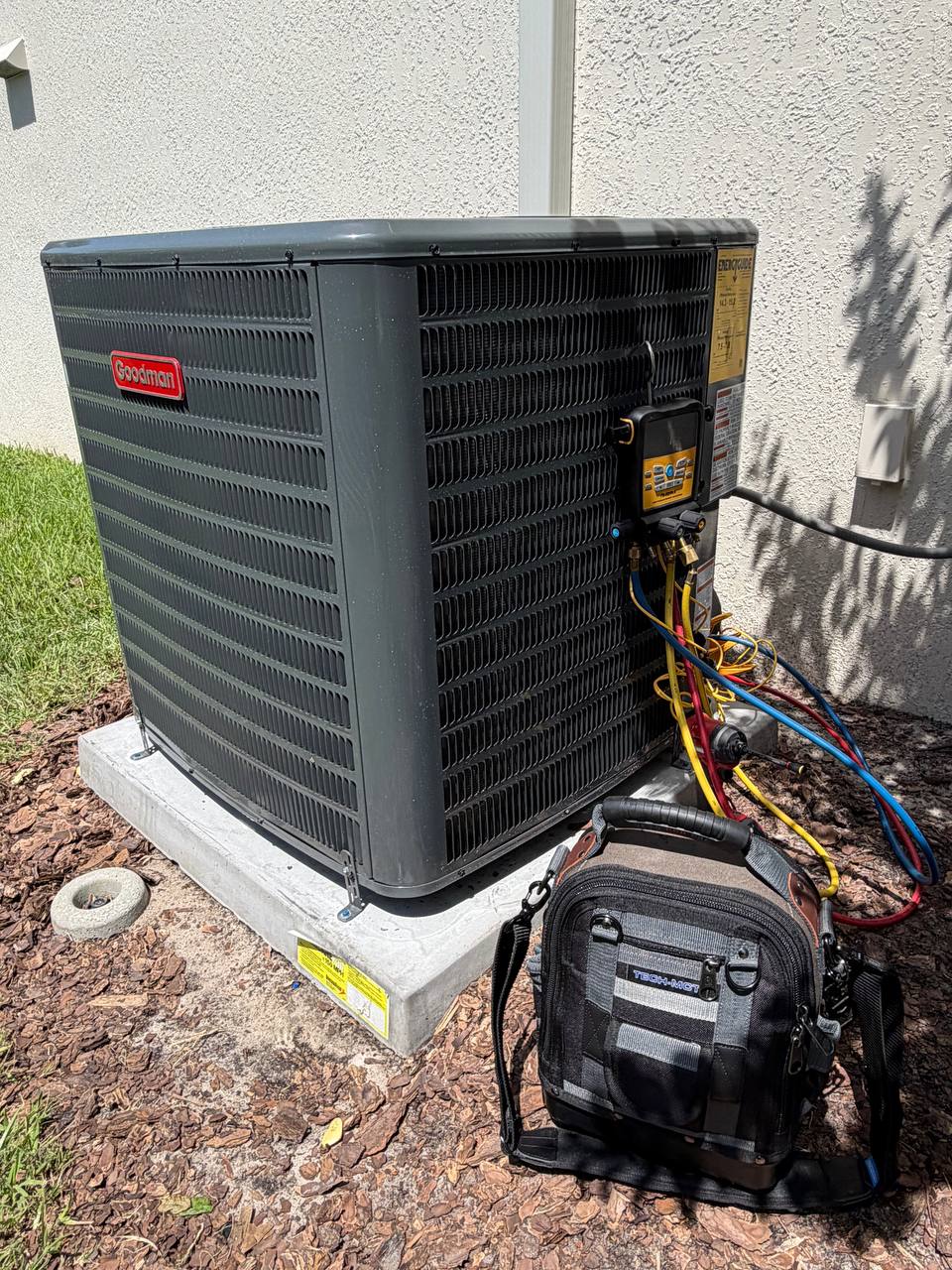
Before hurricane season gets active, walk around your outdoor condenser unit and check the space around it.
Remove or secure:
- Loose branches
- Lawn furniture
- Potted plants
- Yard decorations
- Tools
- Trash cans
- Garden supplies
- Anything lightweight that could become wind-blown debris
Your outdoor unit needs open airflow to operate properly, and during storm conditions, nearby objects can become hazards. Keeping at least a couple of feet of clear space around the unit also makes it easier for a technician to inspect or service the system if needed.
If shrubs or branches have grown too close to the unit, trim them back before storm season. Avoid cutting or pulling anything that could damage refrigerant lines, wiring, or the equipment itself.
2. Do Not Cover the Unit With Plastic During Normal Operation
Many homeowners wonder whether they should cover the outdoor AC unit before a storm. In most cases, you should not wrap the unit in plastic or use a cover while the system may still run.
A covered AC unit can trap moisture and restrict airflow. If the system accidentally turns on while covered, it can overheat or suffer damage.
If a major storm is approaching and you decide to use a manufacturer-approved protective cover or temporary shield, make sure the system is turned off first and remove the cover before turning the AC back on. Never operate the system while it is covered.
For many homeowners, the safer approach is to focus on clearing debris around the unit, securing loose objects in the yard, and shutting the system down at the appropriate time if severe weather is imminent.
3. Consider Turning the AC Off Before the Worst Weather Arrives
If a strong storm is approaching your area, it may be wise to turn your HVAC system off before the worst lightning, wind, or power instability arrives.
A practical approach is:
- Cool the home slightly before conditions deteriorate.
- Set the thermostat to off before the storm is at its strongest.
- Turn off the HVAC breaker if local conditions or instructions warrant it.
- Wait until the storm has passed and power is stable before restarting the system.
This can help reduce the chance of damage from rapid power interruptions or electrical surges. If your home loses power and the AC was running, wait several minutes after power is restored before turning the system back on. This gives electrical components time to stabilize.
If you smell burning, hear unusual noises, see visible damage, or notice the system will not start normally, leave it off and call a professional.
4. Ask About HVAC Surge Protection
Power surges are one of the biggest storm-related risks for HVAC equipment in Florida. Surge protection can help reduce the risk of damage from voltage spikes, lightning-related electrical events, and utility power fluctuations.
There are different types of surge protection, including whole-home surge protection and HVAC-specific surge protection. The right option depends on your electrical setup, equipment, and home.
A licensed professional can inspect your system and explain what type of protection makes sense. Surge protection cannot guarantee that equipment will never be damaged, especially during severe lightning events, but it can be a smart layer of defense for Central Florida homes.
If you are already scheduling seasonal AC maintenance, ask your technician whether your system has appropriate surge protection in place.
5. Check the Condensate Drain Before Heavy Rain and Humidity
Florida humidity makes condensate drainage especially important. Your AC pulls moisture out of the air as it cools your home, and that moisture has to drain away properly.
Before hurricane season, watch for signs of a drain issue:
- Water around the indoor air handler
- Musty odors near vents or the unit
- AC shutting off unexpectedly
- A float switch tripping
- Gurgling sounds near the drain line
- Algae or buildup at the drain termination point
During rainy, humid weather, a partially clogged drain line can become a bigger problem. If the drain backs up, it can cause water damage or shut the system down when you need it most.
Homeowners can safely check for visible standing water and make sure the drain outlet is not obviously blocked. However, if the line is clogged or the system is leaking water, it is best to schedule HVAC service rather than forcing tools or chemicals into the drain.
6. Replace a Dirty Air Filter Before Storm Season
A dirty air filter restricts airflow and makes your AC work harder. In the middle of Florida heat and humidity, poor airflow can lead to comfort problems, frozen coils, higher strain on the system, and weak cooling.
Before storm season begins, check your air filter and replace it if it is dirty. This is especially important if you have:
- Pets
- Allergies
- Recent remodeling dust
- A home that runs the AC frequently
- Return vents near high-traffic areas
Make sure you use the correct filter size and type for your system. Filters that are too restrictive can also reduce airflow, so if you are unsure what your equipment needs, ask your HVAC technician.
7. Schedule Preventive HVAC Maintenance Before Peak Storm Activity
A maintenance visit before hurricane season can help identify issues that are easier to address before severe weather arrives.
During a professional AC maintenance visit, a technician may check:
- Electrical connections
- Capacitors and contactors
- Thermostat operation
- Refrigerant-related performance indicators
- Condensate drain condition
- Evaporator and condenser coil condition
- Blower and airflow performance
- Outdoor unit condition
- Safety controls
This is especially helpful in Central Florida because AC systems often work hard for months before peak summer heat fully sets in. If your system is already struggling in May or early June, storms and power disruptions can make problems worse.
Preventive maintenance does not guarantee storm protection, but it can help catch weak components, airflow concerns, and drainage issues before they turn into no-cooling calls.
8. Know What to Check After the Storm Passes
After severe weather, do a safe visual inspection before restarting your HVAC system.
From a safe distance, look for:
- Branches or debris against the outdoor unit
- Bent or damaged panels
- Standing water around the condenser
- Exposed or damaged wiring
- Unusual smells
- Loud buzzing, grinding, or clicking
- Ice on refrigerant lines
- Water near the indoor air handler
Do not touch damaged wiring, open electrical panels, or attempt to move heavy debris off equipment if doing so could damage refrigerant lines or electrical components.
If the outdoor unit has been flooded, do not turn it on. Floodwater can damage electrical components and create safety risks. Call a qualified HVAC professional to inspect the system first.
9. Be Careful With Generators and HVAC Equipment
Many Central Florida homeowners use portable generators during outages. Portable generators can be helpful for basic needs, but they must be used safely.
Never run a generator indoors, in a garage, or near windows or doors. Carbon monoxide is extremely dangerous. Also, do not connect a generator directly to your home’s electrical system unless you have the proper transfer switch installed by a qualified professional.
Most central HVAC systems require significant power and should not be connected casually to a portable generator. If you want backup power for your AC or heat pump, talk with licensed electrical and HVAC professionals about the safest setup for your home.
10. Have a Local HVAC Contact Ready Before You Need One
After a major storm, HVAC companies can get busy quickly. If your AC stops cooling, trips the breaker, leaks water, or will not restart after power returns, having a trusted local company already in mind can save time.
Wingman Heating and Cooling serves homeowners across Ocala, The Villages, Summerfield, Dunnellon, Wildwood, Lady Lake, Leesburg, Lecanto, Citrus Springs, Hernando, Beverly Hills, and surrounding Central Florida communities.
As a veteran-owned HVAC company, Wingman focuses on practical guidance, honest service, and helping homeowners make informed decisions about repairs, maintenance, replacement, ductwork, heat pumps, thermostats, UV lights, and indoor air quality.
If you want your system checked before hurricane season, or if your AC has problems after a storm, call Wingman Heating and Cooling at 352-340-0805.
When to Call a Professional
Some HVAC checks are safe for homeowners, such as replacing a filter, clearing loose debris around the unit, and looking for obvious water or storm damage.
Call a professional if you notice:
- The AC will not turn on after power returns
- Breakers keep tripping
- The outdoor unit was flooded
- You see damaged wires or electrical components
- The system is making loud or unusual noises
- The indoor unit is leaking water
- The system runs but does not cool
- Ice forms on the coil or refrigerant lines
- You smell burning or electrical odors
- Debris has damaged the unit, fan, coil, or refrigerant lines
For safety, do not open electrical compartments, handle refrigerant lines, or attempt major repairs yourself.
Final Thoughts
Hurricane season is part of life in Central Florida, but HVAC preparation is often overlooked until something goes wrong. Clearing the area around your outdoor unit, checking the filter, paying attention to condensate drainage, considering surge protection, and scheduling maintenance can help your system head into storm season in better condition.
If you are in Ocala, The Villages, or the surrounding Central Florida area and want your AC inspected before hurricane season, Wingman Heating and Cooling can help.
Call 352-340-0805 to schedule HVAC maintenance or storm-season AC service with Wingman Heating and Cooling.
FAQ: HVAC Hurricane Prep in Central Florida
Should I turn off my AC during a hurricane?
If severe weather, lightning, or power instability is expected, it can be wise to turn the AC off before the worst conditions arrive. Some homeowners also turn off the HVAC breaker during major storms. After power returns, wait several minutes before restarting the system. If anything looks or sounds wrong, leave it off and call a professional.
Should I cover my outdoor AC unit before a storm?
Do not run your AC while the outdoor unit is covered. A cover can restrict airflow and trap moisture. If you use a temporary protective cover before a major storm, turn the system off first and remove the cover before restarting it.
Can lightning damage my HVAC system?
Yes. Lightning and power surges can damage HVAC electrical components, including control boards, capacitors, contactors, and thermostats. Surge protection can help reduce risk, but it cannot guarantee complete protection from severe electrical events.
What should I do if my outdoor AC unit floods?
Do not turn the system on if the outdoor unit has been in standing water. Flooding can create electrical hazards and damage components. Call a qualified HVAC technician to inspect the equipment before restarting it.
How often should I schedule AC maintenance in Florida?
Many Florida homeowners benefit from regular maintenance because AC systems run heavily in heat and humidity. A pre-summer or pre-hurricane-season check can help catch airflow, drainage, and electrical concerns before peak storm activity.