The first really hot week of summer is usually when a borderline system starts showing its limits. The AC may still run, but it takes longer to cool the house, humidity hangs around, and one weak point can turn into a comfort problem fast.
There are a few simple checks homeowners in Central Florida can do before calling for help. They will not fix every problem, but they can keep a small issue from becoming a bigger one right when temperatures spike.
1. Start with the filter and return airflow
A clogged filter is one of the fastest ways to make an AC fall behind. If air cannot move freely, the system works harder, room temperatures become uneven, and humidity can creep up.
- Replace dirty disposable filters before the hottest stretch of the season.
- Make sure furniture, rugs, or decor are not blocking return vents.
- Vacuum dust around visible vents and grilles so airflow stays steady.
2. Check your thermostat settings before the house heats up
A thermostat that is set too aggressively can make a system feel like it is always chasing the temperature. That is especially true when the outdoor temperature suddenly climbs and the home starts taking on extra heat.
If you are leaving during the day, use a reasonable schedule instead of dropping the setpoint way down. The goal is steady comfort, not making the system recover from a big temperature swing every afternoon.
3. Keep the outdoor unit clear
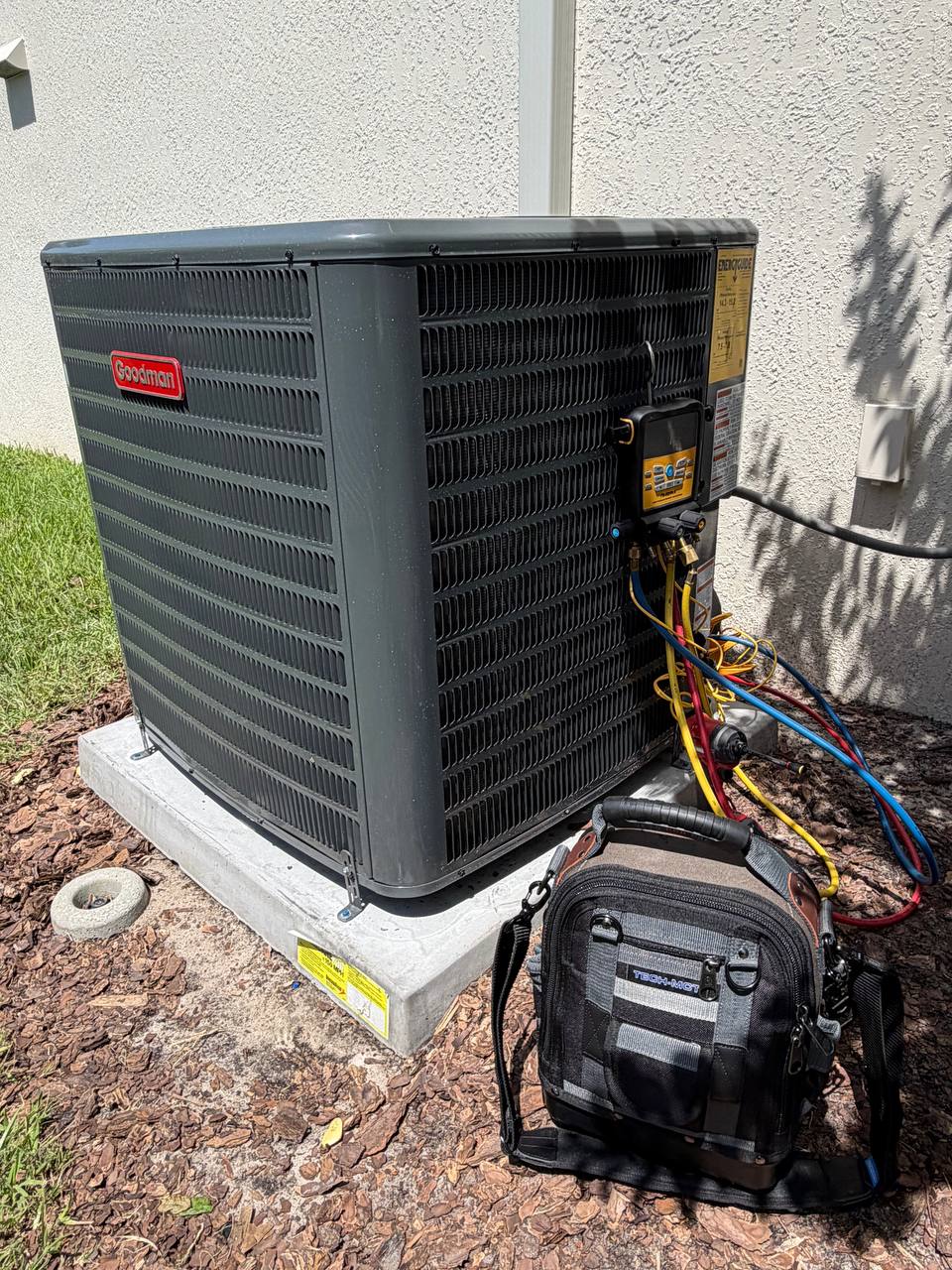
Leaves, grass clippings, and packed dirt can reduce heat transfer. That does not always cause a breakdown, but it can make the condenser work longer on hot afternoons.
- Give the outdoor unit breathing room.
- Trim back plants and make sure the fan area is not crowded.
- Leave at least two feet of clear space around the unit if possible.
4. Watch for drainage and humidity problems
In Florida, comfort is about more than temperature. If the drain line is sluggish or the condensate pan is holding water, the system can struggle to keep humidity under control.
That can show up as a musty smell, sticky rooms, or the AC running longer than usual even when the setpoint has been reached. If you notice that pattern, it is worth getting the system checked before the moisture turns into a bigger issue.
5. Know the warning signs that need a technician
Call for service if you notice unusual noises, warm air from some vents, the breaker tripping, ice on the refrigerant line, or the AC cycling on and off repeatedly. Those symptoms usually mean the problem is more than a filter change.
That is also a good time to compare your options with Cooling Services or review the Service Areas page if you are not sure whether we serve your neighborhood.
Need help before the heat really settles in? Wingman Heating & Cooling can check airflow, drainage, thermostat performance, and overall cooling capacity so your home is ready for the season.
FAQ
How often should I change my filter in Florida summer?
Most homes do best with monthly checks and replacement every one to three months, depending on pets, dust, allergies, and how often the AC runs.
Why does my AC seem slower during the first hot week of summer?
Because the system is suddenly dealing with higher outdoor temperatures, more indoor humidity, and a longer run time. Any weak spot in airflow, drainage, or refrigerant performance becomes easier to notice.
When should I call for professional help?
If your home is still warm after you have checked the filter and thermostat, or if the system is making unusual noises, short cycling, or tripping the breaker, schedule a service visit before the problem gets worse.
Taking care of small issues early is the best way to keep your AC from falling behind once the first real heat wave arrives. If you want a local technician to take a closer look, contact Wingman Heating & Cooling or book your visit today.